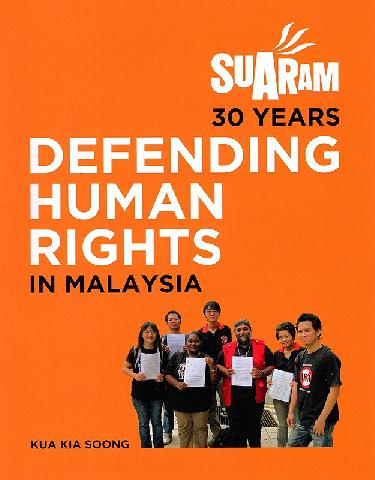
SUARAM 30 years defending human rights in Malaysia Kua Kia Soong
ชื่อเรื่องที่แตกต่าง
Defending human rights in Malaysia
ชื่อเรื่องที่แตกต่าง
Thirty years defending human rights
ISBN
9789671426371(pbk.)
พิมพ์ลักษณ์
Petaling Jaya : Suara Initiatif Sdn Bhd, [2019].
เลขหมู่
JC599.M35 K952 2019
ลักษณะทางกายภาพ
xii, 202 pages : ill ; 23 cm.
หมายเหตุ
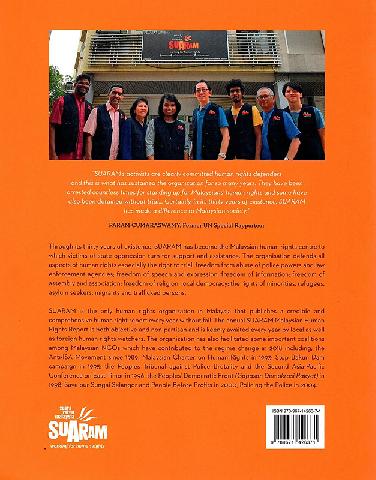
Abstract: SUARAM was born under the shadow of the ISA. Detention-without-trial has been the favourite tool of repression used by the Malaysian state to arrest and detain persons indefinitely without trial ever since its legislation in 1960. Under the rule of Prime Minister Mahathir from 1981, authoritarian measures have included detention without trial, restrictions on the mass media, the assault on the judiciary in 1988, and the centralization of power in the Executive. Operation Lalang in October 1987 produced an unprecedented coalition of democratic forces that emerged to fight for the release of the detainees. It also ignited a new effort among families of the detainees and their support group to provide support for the detainees as well as to campaign for their release. The comradeship among the families and their supporters among the NGOs was crucial in sustaining the anti-ISA campaign. The legacy of this support group and its working method provided the motivating force for the formation of SUARAM in 1989.
245 10 ^aSUARAM 30 years defending human rights in Malaysia /^cKua Kia Soong
246 30 ^aDefending human rights in Malaysia
246 30 ^aThirty years defending human rights
260 ^aPetaling Jaya :^bSuara Initiatif Sdn Bhd, ^c[2019].
300 ^axii, 202 pages :^bill ;^c23 cm.
520 3 ^aSUARAM was born under the shadow of the ISA. Detention-without-trial has been the favourite tool of repression used by the Malaysian state to arrest and detain persons indefinitely without trial ever since its legislation in 1960. Under the rule of Prime Minister Mahathir from 1981, authoritarian measures have included detention without trial, restrictions on the mass media, the assault on the judiciary in 1988, and the centralization of power in the Executive. Operation Lalang in October 1987 produced an unprecedented coalition of democratic forces that emerged to fight for the release of the detainees. It also ignited a new effort among families of the detainees and their support group to provide support for the detainees as well as to campaign for their release. The comradeship among the families and their supporters among the NGOs was crucial in sustaining the anti-ISA campaign. The legacy of this support group and its working method provided the motivating force for the formation of SUARAM in 1989.